El Paso County Public Records Divorce documents are official legal files that show the end of a marriage. These records include divorce petitions, final court orders, and certificates that prove a marriage was legally dissolved. People search for these records to verify legal status, support genealogy research, or meet requirements for remarriage, immigration, or government benefits. Both Texas and Colorado have El Paso Counties, each with separate systems for accessing divorce records. Knowing which state you need is the first step to getting accurate and fast results.
How to Search El Paso County Public Records Divorce in Texas
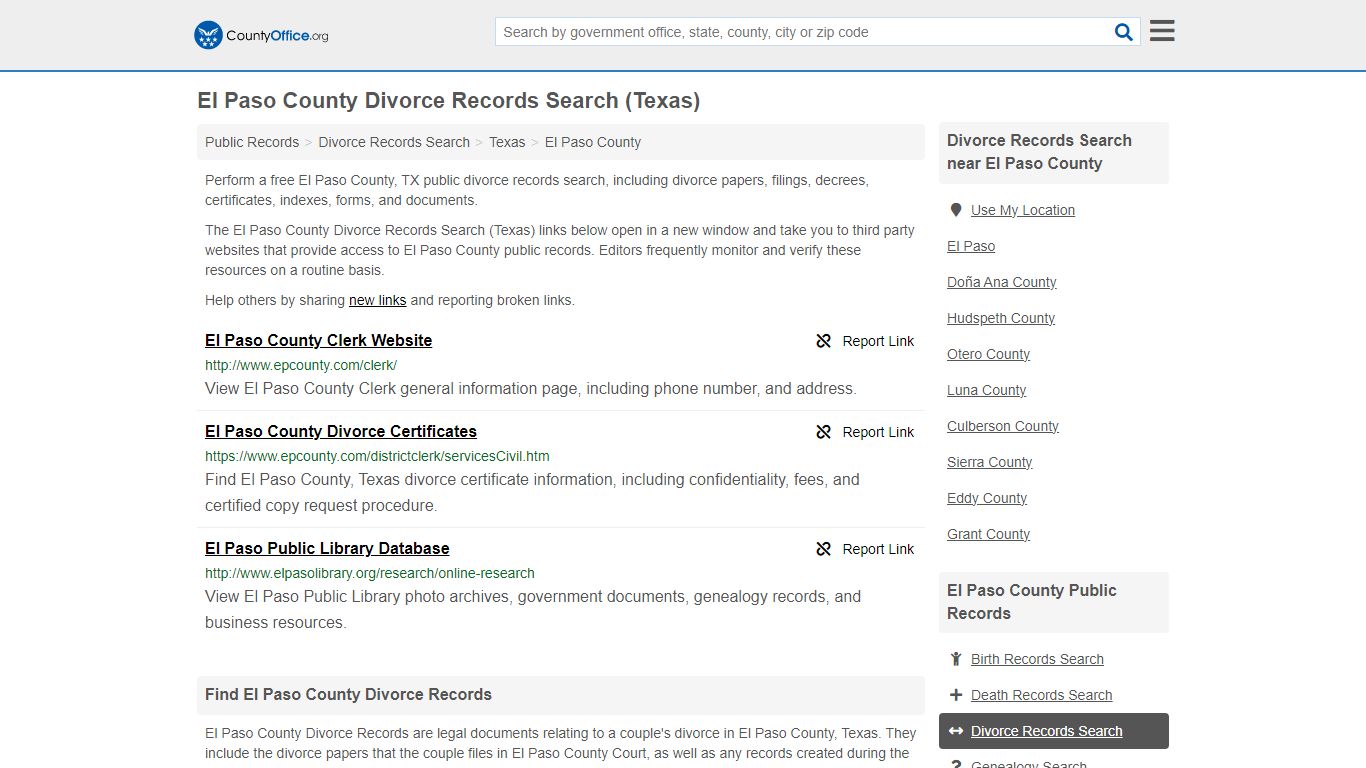
Texas residents can look up divorce records online through the El Paso County Clerk’s official portal. The database holds cases from the 1970s to today. Each record lists the case number, filing date, and names of both parties. You can view original petitions, final decrees, dissolution certificates, and docket indexes. All files are free to open as PDFs via trusted third-party sites linked directly from the county page.
The search tool is simple. Enter a last name or case number to find matches. Results show key details without needing an account or payment. If you need a certified copy, you must request it separately. Online access helps users confirm basic facts quickly before deciding to order official documents.
Where to Get Certified Copies in Texas
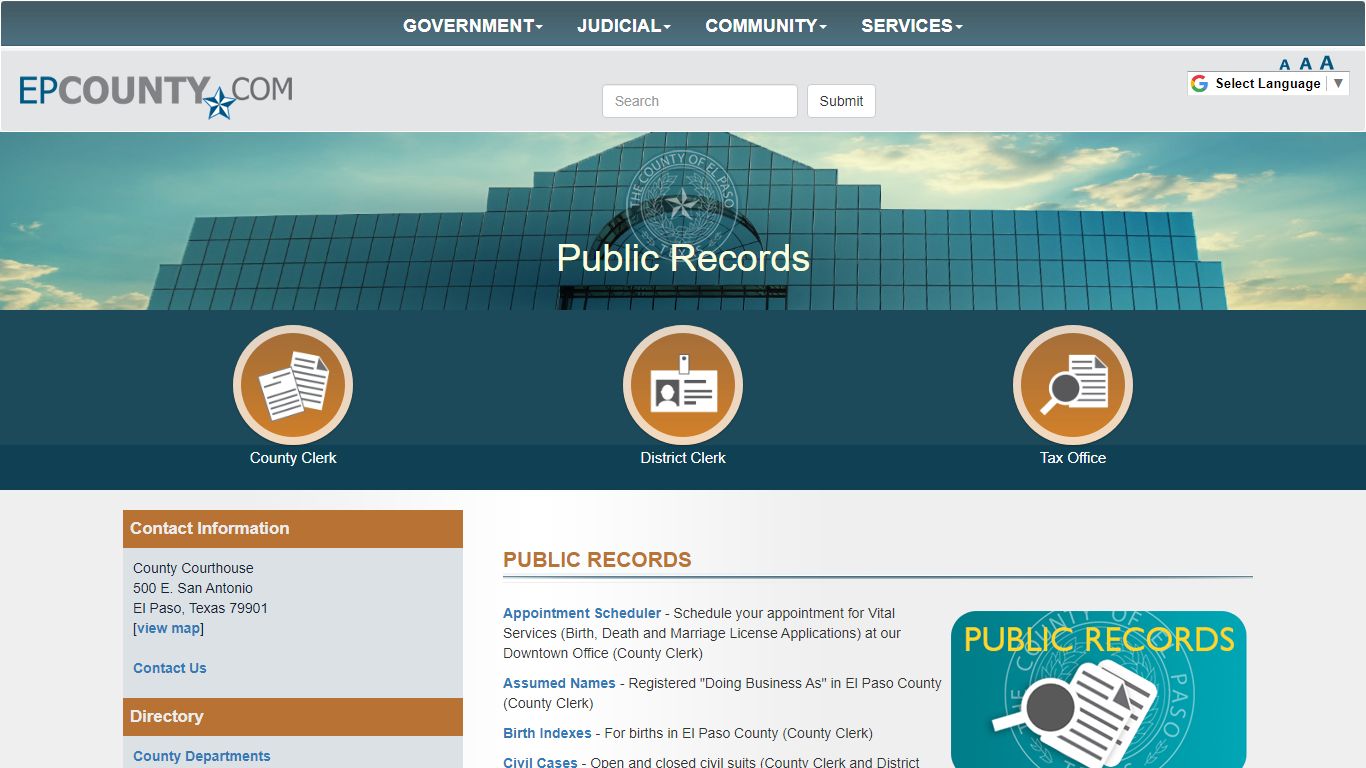
Certified divorce decrees from El Paso County, Texas, are available at the County Clerk’s office located at 500 E. San Antonio Avenue, El Paso, TX 79901. Office hours are Monday through Friday, 8:00 AM to 5:00 PM. Walk-in visitors must bring a government-issued photo ID. The fee is $15 per certified copy. Staff can also provide notarized extracts and help with fee schedules or email updates for online requests.
You may also submit requests by mail or through the county’s online portal. Online orders require a valid email address. Payment is accepted by credit card. Processing usually takes 3–5 business days. Certified copies bear the official seal and signature, making them acceptable for legal use such as remarriage, passport applications, or court filings.
El Paso County Public Records Divorce in Colorado
Colorado’s El Paso County offers free online access to divorce records dating back to 1903. The County Office search tool lets users filter by year, case type, or courtroom number. Records include original petitions, final judgments, and docket numbers. Each entry shows the plaintiff and respondent names for easy identification. Scanned PDFs are hosted on secure third-party platforms and can be downloaded at no cost.
This service supports legal research, family history projects, and personal verification needs. Unlike Texas, Colorado provides high-resolution digital copies directly through its public portal. No registration is required. Users simply enter search terms and click to view or save files. For older cases between 1903 and 1941, the Colorado State Archives holds preserved records available upon written request.
How to Request Historic Divorce Records in Colorado
Divorce records from 1903 to 1941 in El Paso County, Colorado, are kept by the State Archives. These include docket numbers, filing years, and names of presiding judges. To obtain a digitized copy, submit a written request to the Archives’ Records Division. Include the case number if known, or provide full names and approximate year. There is no online form for these older files.
Processing may take several weeks. Once ready, copies are mailed or emailed depending on preference. This service is free, but expedited handling may incur fees. Researchers use these records for genealogy, academic studies, or verifying historical family events. Always check current contact details on the official Colorado State Archives website before sending requests.
Online Search Tools and Digital Access
Both Texas and Colorado offer modern online portals for El Paso County Public Records Divorce searches. In Texas, the County of El Paso website aggregates divorce filings alongside property deeds and court orders. Users select “Divorce Records” to view indexed cases, request electronic copies, and pay fees by credit card. The system also links to court directories and public meeting schedules.
In Colorado, the Clerk and Recorder’s office provides direct digital access with filtering options. You can narrow results by date range, case type, or party name. All documents are stored in climate-controlled archives and assigned unique instrument numbers. Standard processing for certified copies is 3–5 business days. Both states prioritize transparency and ease of access for residents and researchers.
Fees, Processing Times, and Accepted Payments
Fees for certified divorce records vary by state and service type. In Texas, each certified copy costs $15. In Colorado, the fee is $5 per document. Both accept cash, check, and major credit cards. Online payments are processed securely through official county gateways. Walk-in service is available during regular business hours.
Processing times depend on volume and method. In-person requests are often fulfilled the same day. Mail and online orders typically take 3–5 business days. Rush services may be available for an extra charge. Always confirm current fees and timelines before submitting your request, as policies can change.
| State | Certified Copy Fee | Processing Time | Payment Methods |
|---|---|---|---|
| Texas | $15 | Same day (walk-in), 3–5 days (mail/online) | Cash, check, credit card |
| Colorado | $5 | 3–5 days | Cash, check, credit card |
Contact Information and Office Locations
For El Paso County, Texas, contact the County Clerk at (915) 546-2071. The main office is at 500 E. San Antonio Avenue, Suite 105, El Paso, TX 79901. An annex at 9521 Socorro Road, Suite A-1, also serves record requests. Both locations offer free Wi-Fi, seating, and self-service kiosks. Email inquiries can be sent through the official county website.
In Colorado, call 719-452-5000 for the Combined Courts. The primary clerk office is at 1675 West Garden of the Gods Road, Colorado Springs, CO 80907. A secondary location at 200 South Cascade Avenue handles historic record retrieval. Hours are Monday to Thursday, 8:00 AM–4:30 PM, and Friday, 8:00 AM–12:30 PM.
What’s Included in a Typical Divorce Record
A standard El Paso County Public Records Divorce file contains several key documents. These include the original petition filed by one spouse, the final divorce decree signed by a judge, and a certificate of dissolution. Some records also list child custody arrangements, property divisions, and spousal support terms, though sensitive details may be redacted for privacy.
Each document is indexed by case number and filing date. Party names appear exactly as written in court. Researchers should note that informal separations or annulments are not included unless formally adjudicated. Only finalized divorces appear in public indexes. Always verify the completeness of your record before using it for legal purposes.
Common Reasons People Request These Records
Individuals seek divorce records for many valid reasons. Some need proof of single status to remarry. Others require documentation for immigration visas, Social Security benefits, or name changes. Lawyers and genealogists use them to build case histories or trace family lineages. Employers or landlords may also request verification in rare cases.
Having an official copy prevents delays in important life events. It also protects against fraud by confirming legal marital status. Always ensure your document is certified if needed for government or legal use. Uncertified printouts may not be accepted.
Privacy and Legal Restrictions
While divorce records are public in both Texas and Colorado, certain details may be sealed by court order. Cases involving minors, domestic violence, or sensitive financial matters might have restricted access. Researchers cannot view sealed portions without a judge’s permission.
Additionally, some third-party sites hosting PDFs may include advertising or require email sign-ups. Always use official county portals when possible to avoid misinformation or scams. The county clerk’s office can clarify what information is publicly available and guide you through proper channels.
Tips for a Successful Search
Start by confirming which El Paso County you need—Texas or Colorado. Gather full names, approximate divorce year, and case number if known. Use the official county website to avoid fake services. Double-check spelling when entering names, as minor errors can block results.
If you don’t find a record, try alternate spellings or search by one party’s name only. Older cases may be in archives rather than online databases. For certified copies, bring valid ID and arrive early to avoid wait times. Keep receipts for reimbursement or tracking.
Emergency and Remote Services
Both counties offer remote options for those unable to visit in person. Texas allows online requests with email notifications. Colorado accepts emailed inquiries with a completed Records Request form. During emergencies like health crises, temporary procedures may apply, such as extended deadlines or virtual appointments.
Check the latest updates on each county’s homepage before visiting. Some services may shift online temporarily. Staff are trained to assist with urgent needs, including name changes or court-ordered verifications.
Genealogy and Historical Research
Historic divorce records are valuable for family history projects. Colorado’s archives hold cases from 1903–1941, offering insights into early 20th-century family law. Texas records from the 1970s onward reflect modern legal practices. Researchers can trace surname changes, migration patterns, and social trends through these documents.
When citing records, include the case number, court name, and retrieval date. Always respect privacy by not sharing sensitive details publicly. Many libraries and historical societies partner with counties to digitize records, expanding access for future generations.
Frequently Asked Questions
Below are common questions about El Paso County Public Records Divorce. Answers are based on current policies from official sources in Texas and Colorado. Always verify details before acting, as rules may change.
Can I get a divorce record if I don’t know the case number?
Yes. You can search using just the last name of one party in most online systems. Both Texas and Colorado allow name-based searches. If multiple matches appear, narrow results by year or location. For older records, contact the archives directly with as much detail as possible.
Are divorce records free to view?
Yes, viewing is free in both states. You can open and download PDFs at no cost through official county portals. However, certified copies require a fee. Uncertified views are suitable for personal reference but not for legal submissions.
How long does it take to receive a certified copy by mail?
Mail requests typically take 3–5 business days after processing begins. Add extra time for postal delivery. Online orders may be faster if electronic delivery is available. Rush services are sometimes offered for urgent needs.
Can someone else request a record for me?
Yes, but they must provide your written authorization and a copy of your ID. Some offices require notarized permission. Check specific requirements with the clerk’s office before sending a representative.
What if the divorce happened before 1970 in Texas?
Records before the 1970s may not be digitized. Contact the County Clerk or State Archives to inquire about physical files. Some older documents are stored offsite and require special retrieval procedures.
Do I need a certified copy to remarry?
Most states require a certified divorce decree to prove you are legally single. Uncertified printouts are usually not accepted. Obtain a certified copy from the issuing county before applying for a new marriage license.
Are same-sex divorces treated differently?
No. All finalized divorces are public records regardless of gender. The process and access rules are the same for every case. Documentation requirements do not differ based on marital type.
Official Website: https://www.epcounty.com/clerk/ Phone (Texas): (915) 546-2071 Phone (Colorado): 719-452-5000 Visiting Hours (TX): Mon–Fri, 8:00 AM–5:00 PM Visiting Hours (CO): Mon–Thu, 8:00 AM–4:30 PM; Fri, 8:00 AM–12:30 PM